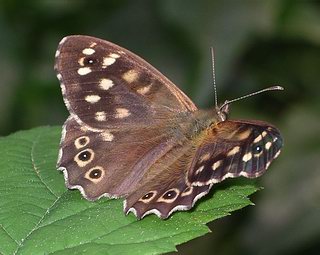
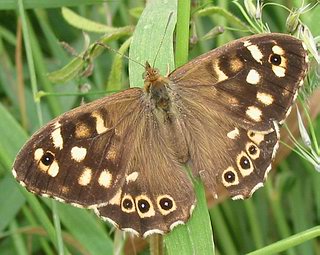
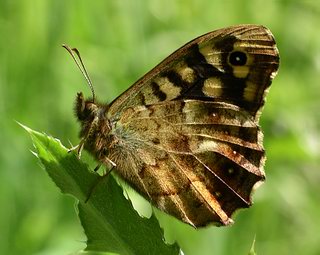
Information

| Red List status: | Least Concern |
| NERC Act S41: | Not listed |
| Local status: | Common and widespread. |
| Size: | Medium. |
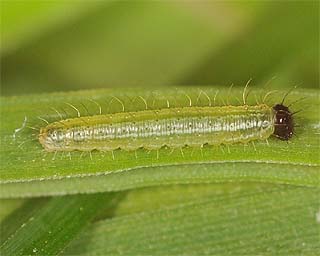
| Larval foodplant: | A wide range of grasses |
| No. of broods: | Usually three, but as they can overlap it may seem continuously brooded. Four may occur in a hot year. |
| Flight time(s): | Late March to late October. Numbers fall and rise as one brood fades into another, but numbers gradually build throughout the year.
Average first date: 25th March
Average last date: 24th October |
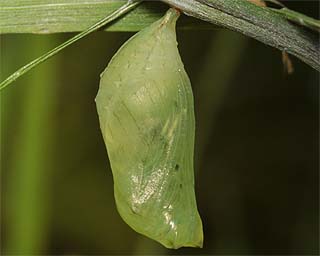
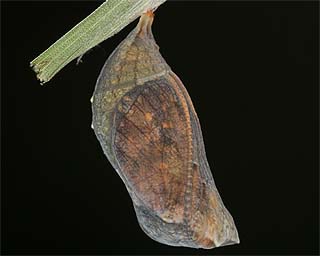
| Winter: | Uniquely this species can overwinter as either larva or pupa. |
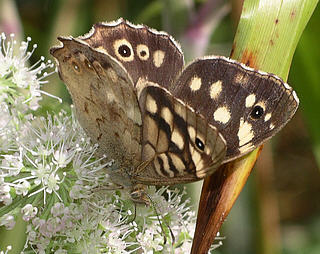
| Habits: | Males perch in dappled sunlight, holding small territories. They may also patrol, looking for females. Rarely seen feeding on flowers. They normally feed out-of-sight on honeydew. |
| Habitats: | Woodland, scrub, mature hedgerows, parks and even wooded gardens. Anywhere that provides dappled sun. |
|
|
Distribution:
|